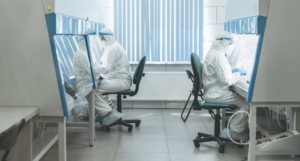

Differences Between USP 795, 797, and 800 Cleanrooms
Many healthcare facilities face the challenge of bringing an existing compounding area into compliance with USP 800, which often requires significant mechanical and infrastructure upgrades.

Many healthcare facilities face the challenge of bringing an existing compounding area into compliance with USP 800, which often requires significant mechanical and infrastructure upgrades.

AI is driving a new era of data center growth and increasing demand for high-performance infrastructure. Unlike traditional data centers, AI facilities rely on high-density

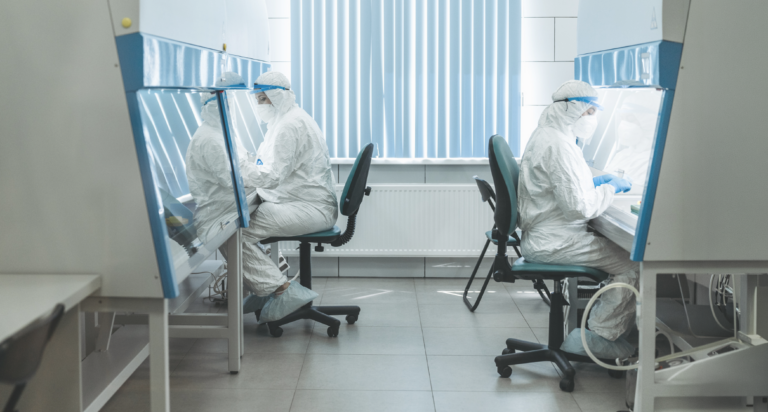
USP Chapters 795, 797, and 800 are the foundation for safe pharmaceutical compounding in healthcare and pharmacy environments. Together, they establish expectations for non-sterile and

When designing a cleanroom, the choice of ceiling components, particularly the lighting, plays a critical role in determining the overall effectiveness of your controlled environment.

This article is also available in Spanish. Negative Pressure Rooms: A Key Component of Infection Control in Healthcare Negative pressure rooms have received increased attention in

What are the options for temporary negative pressure triage and emergency room structures?

Facilities often choose PAC for cleanroom construction services because our vendor and manufacturing networks are not limited to any single brand-specific solution. PAC cleanroom expertise in your back pockets helps you overcome preliminary engineering challenges and consolidate your project management to a single point of contact.

What are the steps for medical device cleanroom validation? Cleanroom validation ensures cleanroom construction meets the performance standards set forth during cleanroom planning, cleanroom installation, and cleanroom calibration.

The central controller integrates the data from both the thermostats, fan filter processors, and room-side environmental sensors. Fan filter speed is then adjust by each group to achieve the specified room pressure while at ideal temperature and humidity.

Before cleanroom validation, a cleanroom requires mechanical calibration. HVAC calibration first ensures that the room meets the performance parameters which would deliver the expected results during final ISO validation, such as differential pressure, air change rates, and uniform airflow distribution.

There are a few final preparations required before the final cleanroom flooring installation. Here’s what to expect and consider for cleanroom tile installations and flooring installation.

In this post, we overview technical considerations for clean room fan filter unit selection, installation, and features. You’ll learn how PAC approaches design and configuration

In medical device cleanrooms, a common configuration is an ISO 8 gowning room and ISO 7 primary production area. A cascading air flow design and

How is a medical device cleanroom built? Here’s a component-by-component guide to ISO Class 7 cleanroom construction.

What are the advantages of cleanrooms for e-liquids? What are the American E-liquid standards for the FDA, and ISO cleanrooms? Does the FDA require a cleanroom for e-liquids and e vape products?

There are a few options available to cleanroom facilities who require new upgrades for USP 800 compliance. The best option will depend on the variables

What equipment and engineering controls do USP 800 cleanrooms require? What types of storage and monitoring systems will I need?

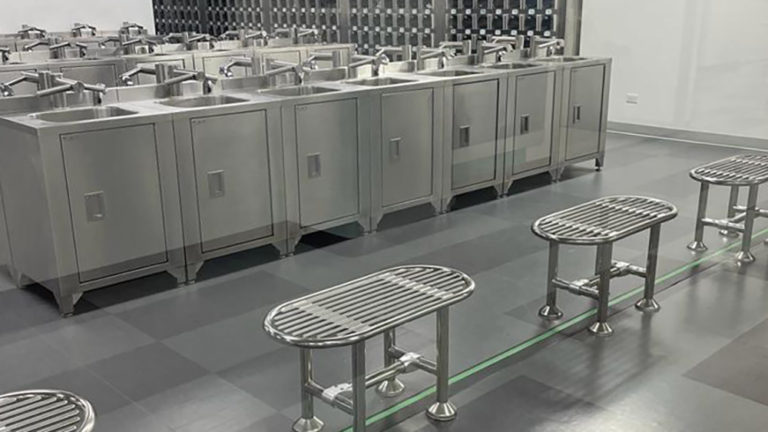
A gowning room has many variables. There is no mathematical formula when determining the features, surfaces, and HVAC requirements best suited for your application. Space requirements, volume of operators, aseptic workflows, material choice, and even aesthetics all factor into design considerations. Most facilities benefit from contacting a controlled environment specialist who can identify critical product sensitivities, storage requirements, and operational standards.

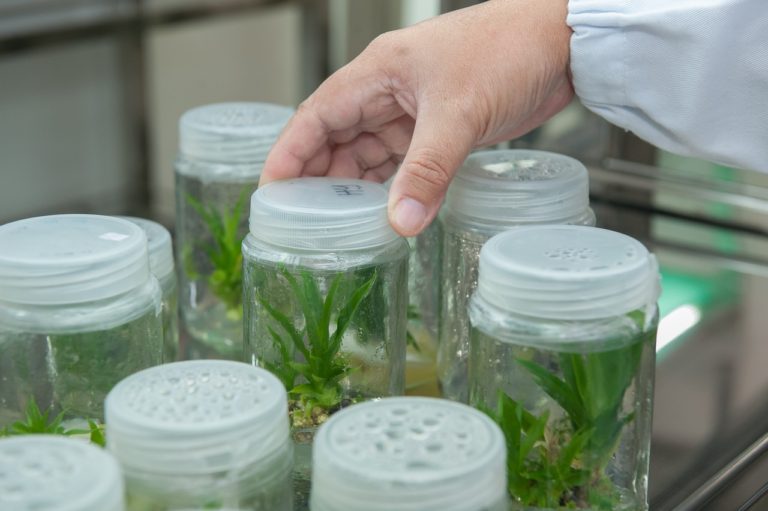
What do I need to tissue culture plants? What are the advantages of tissue culture? This article provides basic environment design, supplies, and protective requirements for non-hazardous sterile processes during the cell culturing and micro-propagation of clones. Learn about the tools and equipment required for aseptic workflow during tissue culture processes.

Large clinical-scale cleanroom operations for T cell therapies often use a class ISO 7 (Class 10,000) cleanroom room environment with an ISO 5 (Class 100) biological safety hood.