In this post, we overview technical considerations for clean room fan filter unit selection, installation, and features. You’ll learn how PAC approaches design and configuration of cleanroom HEPA filter units and fan filter housing specifications.
This post is a part PACs medical device cleanroom build overview. In Part 3, we discuss some of the HVAC and cleanroom fan filtration components required for medical device standards. Here you’ll learn about the inner workings and construction components of a modular cleanroom’s roof, ceiling, and HEPA filtration system.
Medical Device Cleanroom Fan Filter Overview
Fan filter units, also known as integrated blower modules, are a modular cleanroom filtration solution with some advantages over traditional air handling systems. They are applied in both small and large spaces with a cleanliness rating as low as ISO Class 3. Air change rates and cleanliness requirements determine the number of fan filters required. An ISO Class 8 cleanroom ceiling may only require 5-15% of ceiling coverage while an ISO Class 5 or cleaner cleanroom may require 60-100% coverage.
Each HEPA filter housing is selected by size, airflow rate, and filter media options. This allows further tailoring of cleanroom spaces based on budget and process sensitivity. Hazardous environments may require a reverse airflow fan filter unit to achieve negative pressure. A higher rate of air exchange improves particle filtration but subsequently reduces filter life.
Fan Filter Styles

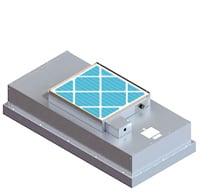
Above we see a fan filter housing with an integrated blower, HEPA filter, and upstream prefilter.
Fan filter style and CFM are unique to the type of medical device manufacturing processes in tow. By definition, a cleanroom requires HEPA filtered air. PAC offers ULPA filters (Ultra-Low Particulate Air/Arrestor), but these are more common in electronics and nano-fab based cleanrooms with greater sensitivities.
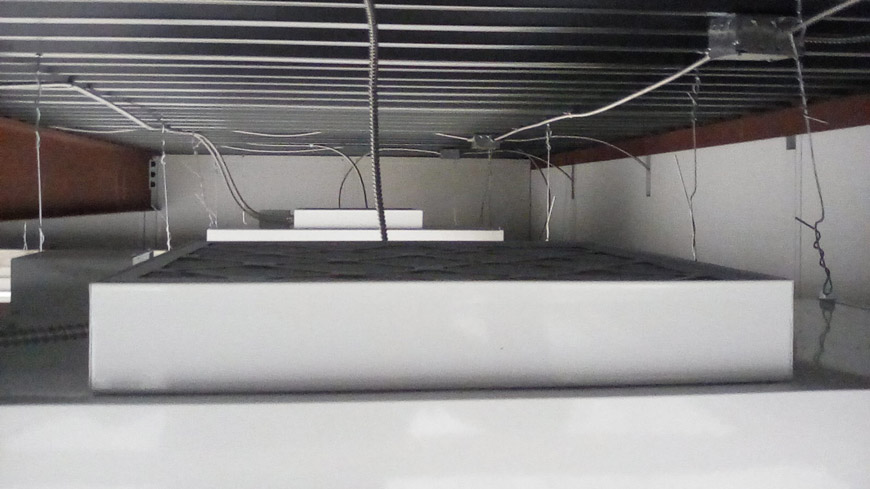
These 2 x 4′ SAM MicroSound Fan Filter Units provide between 400 to 750 CFM. An anodized aluminum frame and diamond pattern white epoxy, acrylic, or polystyrene coated steel grille protect the 53mm HEPA filter media.
What’s the Advantage of an NCR Cleanroom Fan Filter?
Most cleanroom fan filter units fall within two categories: pharmaceutical-style or NCR (non-cleanroom side replaceable).
Pharmaceutical style fan filter units have both a CRS replaceable housing AND a gel seal filter membrane. CRS is common when critical pharma operations require frequent filter changeouts and validation testing every 6 months. Room-side-replacement (also referred to as RSR) allows faster service and filter maintenance without ceiling panel removal or top-side access.
Gel-seal fan filter units ensure a seamless, leak-free gap between the filter housing. A soft gel material seals easier and requires less clamping pressure than a typical gasket.
An NCR style cleanroom fan filter is not replaceable from inside the cleanroom and requires overhead access for filter replacement. NCR filters are also available with a gel-seal, but usually, have a traditional knife-edge gasket.
In this case, the customer opted for NCR style filters as the facility does not require frequent replacement of fan filter media. In most cases, a HEPA filter only requires replacement every 3 – 5 years, but sometimes sooner for extra dirty applications.
Read More: Fan filter Replacement Frequency and Troubleshooting
Integrated Cleanroom HEPA Fan Filter Media
The HEPA filter is 99.99% efficient and includes an ASHRAE pleated prefilter, also available with 99.9995% efficiency ULPA filters. While a HEPA filter may last for many years at a time, impacted particles within a filter increase the input air requirements for the equivalent output air.
Related: How often does fan filter media require replacement?
Cleanroom Fan Filter Replacement
Clogged filters require more power, and quickly drive up cleanroom HVAC costs. Inline pre-filters capture large particles upstream of the HEPA filters, therefore extending the life and performance of HEPA filter media.
NCR fan filter replacement requires removing the unit from the ceiling, placing the unit on its side (never on its grill or upside down), and swapping out the filter media.
Integrated Cleanroom Fan Filter Units and Power Boxes
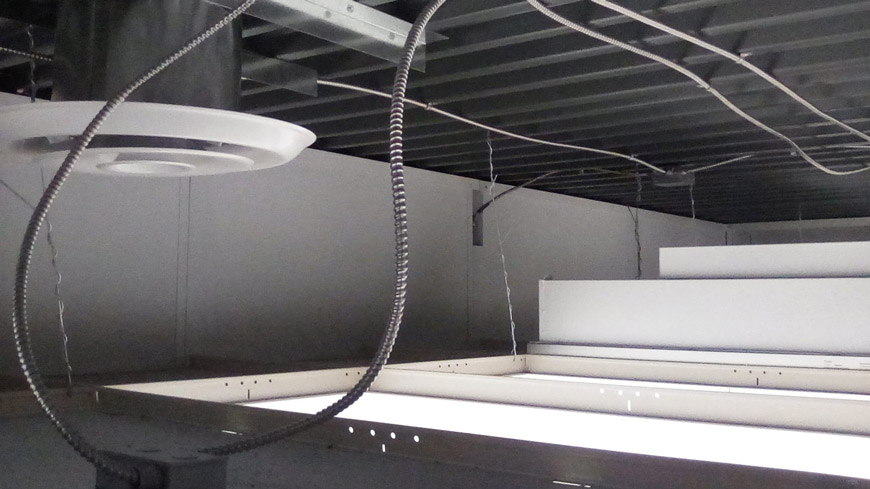
Factory wired junction boxes with integral distribution wiring substantially reduce onsite electrical work
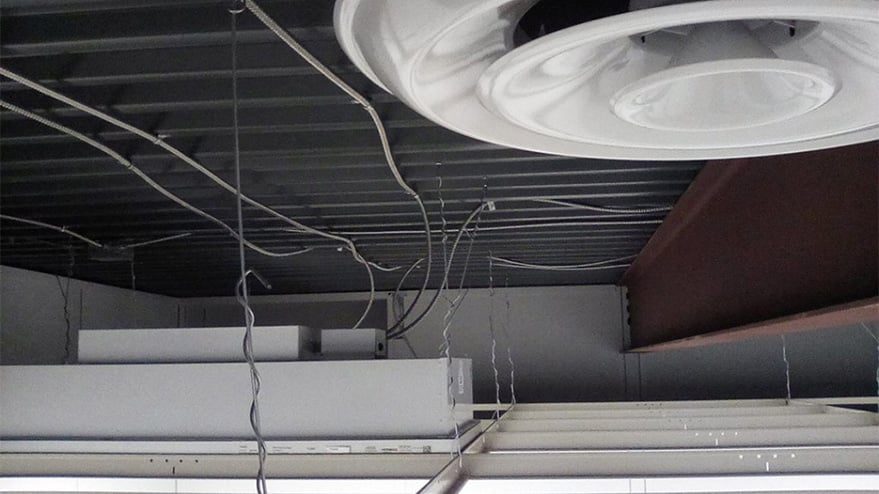
In the lower left hand of the screen, power lines and box connections run neatly between each fan filter unit. Later modifications (not pictured) connect all of the fan filters to a variable drive fan control system via CAT 5 cables.
Variable Drive Cleanroom Fan Filter Systems
A variable fan filter drive system is a premium feature. Fan speed adjustments maintain air velocity output under filter load — or when changing manufacturing conditions require increase operators and particulate burdens.
- Fan filter units are controlled individually or in groups, typically 1-4 units per address.
- Fan speeds are set and/or adjusted from a console located outside the cleanroom without breaching the integrity of the cleanroom. Adjustments are possible by Individual address, zone or globally.
- The number of addresses is almost unlimited.
- Room or equipment layouts with unique airflow requirements are easy to set and control.
CleanPro® fan filter unit control systems allow manual and automated fan speed manipulation when the cleanroom is not in use and preserves the overall life of the blower motor and HEPA filter. The system connects to a central control station which is either hardwired for local display or controlled via a remote PC connection.
While the full benefit of variable fan filter drive systems is beyond the scope of this post, you can read more about other features such as alarms, area groupings, room controls, and installation costs on the PAC website.
Extending Cleanroom Fan Filter Life and Cost Reduction
A cleanroom generally runs 24 hours a day, 7 days a week. Operating a cleanroom 24/7 is costly, but not as costly as production losses incurred by a shutdown. Restarting a cleanroom may require somewhere between a few hours and few days of operating time as well as a full cleaning depending on the size and air change rates.
When not in use, slowing down fan filter speed improves the life of the motor and filters, while also reducing power consumption.