
Fume control is integral to electronics manufacturing because of the hazardous substances released during production. Soldering operations, in particular, generate fumes that can contain toxic metals and chemical residues. Flux vapors, used in the soldering process, release volatile organic compounds contributing to air quality issues. Generating particulate matter can lead to contamination, affecting the performance of sensitive electronic components.
Insuring a clean working environment is about protecting worker health and maintaining the quality of electronic products. Prolonged exposure to toxic fumes and particulates can lead to serious health problems. Preventing contamination from airborne pollutants is critical to preserving the functionality and reliability of electronic devices. Keep reading to learn about the key differences between solder fume extractors and smoke absorbers, their benefits, and what brands you can find at PAC to help you make informed decisions about fume control in your manufacturing processes.
Fume Extractors vs. Smoke Absorbers
Choosing the right equipment is crucial when controlling airborne contaminants in electronics manufacturing. Both fume extractors and smoke absorbers improve air quality, but they do so in different ways and are suitable for various applications. Identifying these differences is critical to selecting the right solution for your manufacturing environment.
Defining Fume Extractors and Smoke Absorbers
Fume Extractors
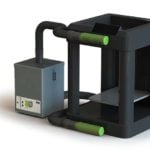
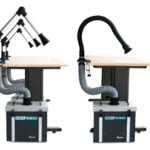
Fume extractors are devices designed to capture and filter out hazardous fumes, vapors, and particulate matter directly at the source. They typically comprise a collection hood, flexible ducting, and a filtration system that removes contaminants before releasing the cleaned air back into the environment. Fume extractors are highly effective at capturing fine particles and harmful gasses, making them ideal for applications involving soldering, welding, and other processes that produce significant fumes.
Smoke Absorbers
Smoke absorbers draw smoke in and filter it along with other airborne contaminants over a broader area. They usually feature a fan that pulls the contaminated air through an activated carbon filter, which absorbs smoke, odors, and particulate matter. Smoke absorbers are best suited for lighter, less concentrated applications, such as small-scale soldering projects or areas with less intense fumes.
Effectiveness in Capturing Airborne Contaminants
Fume Extractors
Fume extractors are highly effective in capturing airborne contaminants directly at their source. The key to their effectiveness lies in the proximity of the collection hood to the emission point. With this setup, fumes and particulates are captured before they can disperse into the surrounding air. The multi-stage filtration systems, often including HEPA and activated carbon filters, ensure that a wide range of contaminants, including microscopic particles and harmful gasses, are removed from the air.
Smoke Absorbers
Smoke absorbers, while effective, are generally less powerful than fume extractors. They are designed to handle lower concentrations of fumes and are typically used in environments where heavy-duty fume extraction is not required. Smoke absorbers are good at reducing smoke and odors but may only capture some fine particulates and toxic gasses as effectively as fume extractors. They are more suited to environments with lower levels of airborne contaminants.
Suitability for Various Applications
Fume Extractors
These systems are ideal for applications involving high fumes and particulates. They are essential in settings where workers are near the emission source and where maintaining a contaminant-free environment is crucial for the quality of electronic components.
Smoke Absorbers
Smoke absorbers are often used in smaller workshops or for occasional soldering tasks where a high-powered fume extractor may not be necessary. They are also helpful for improving general air quality in areas where fumes are less intense but still present.
Choosing the Right Equipment
Selecting between a fume extractor and a smoke absorber depends on the specific needs of your manufacturing process. Knowing the differences between these equipment types guarantees you choose the best solution for your applications, creating a safer and cleaner workspace for electronics manufacturing.
Benefits of Fume Control Equipment in Electronics Manufacturing
Fume Extractors
- Improved Air Quality – Capture and filter harmful fumes, vapors, and particulates at the source, ensuring cleaner air.
- Protection of Workers’ Health – Remove toxic substances like lead, rosin, and VOCs, reducing the risk of respiratory issues, skin irritation, and other health problems.
- Maintenance of High-Quality Production Standards – Prevent the dispersion of fine particles and contaminants, ensuring that sensitive electronic components remain uncontaminated and functional.
- Enhanced Productivity – Create a safer and more comfortable work environment, allowing workers to complete their tasks uninterrupted.
- Compliance with Health and Safety Regulations – Help companies meet industry standards and regulatory requirements for air quality and worker safety.
Smoke Absorbers
- Improved Air Quality – Reduce smoke, odors, and particulate matter, enhancing air quality in lighter-duty applications.
- Protection of Workers’ Health – Mitigate exposure to lower concentrations of fumes and smoke, contributing to a healthier work environment.
- Maintenance of High-Quality Production Standards – Keep the workspace cleaner and reduce the risk of defects caused by airborne contaminants in less intensive applications.
- Enhanced Productivity – Improve general air quality, creating a more pleasant and productive workplace.
- Compliance with Health and Safety Regulations – Help companies meet industry standards and regulatory requirements for air quality and worker safety.
Read More: Why Do I Need Fume Extraction?
Key Considerations for Choosing Fume Control Equipment
Selecting the right fume control equipment for electronics manufacturing requires careful consideration of several key factors to ensure optimal performance and safety. One of the primary considerations is understanding the type of contaminants produced during your manufacturing processes. Different soldering materials, such as lead-based and lead-free solders, generate varying levels of toxic fumes, necessitating specific filtration systems to capture these pollutants effectively.
The intensity and frequency of use also play a crucial role in determining the appropriate fume control equipment. High-volume manufacturing operations with continuous soldering require robust fume extractors capable of efficiently handling large quantities of contaminants. Conversely, smoke absorbers may provide sufficient fume control for occasional or low-volume tasks. Additionally, the size and layout of your manufacturing facility are essential factors. More extensive facilities may need multiple fume extractors or strategically placed smoke absorbers to ensure comprehensive coverage. At the same time, smaller workshops might benefit from portable units that can easily move between workstations. Existing ventilation systems should also be considered, as fume control equipment can integrate or enhance them.
Compliance with industry regulations and standards is another critical factor. Ensuring that the chosen fume control equipment meets all relevant guidelines, such as those set by the EPA, is essential for maintaining air quality and worker safety. Filtration efficiency is equally important; equipment with multi-stage filtration systems, including HEPA and activated carbon filters, is highly effective at capturing a wide variety of particulates and gasses. The ease of maintaining and replacing filters should also be considered, as regular upkeep is vital for sustained performance.
Brands You’ll Find at PAC
Metcal
With a steadfast dedication to performance and risk management, Metcal empowers professionals with tools designed to enhance productivity while ensuring safety. Their range of fume extraction systems and smoke absorbers are indispensable assets, creating environments that prioritize health, efficiency, and excellence in electronic manufacturing.
Weller
Weller, a trusted name in soldering solutions, prioritizes safety with its top-of-the-line fume extraction systems and smoke absorbers. Whether you require high-volume extraction or precise direct extraction, Weller delivers unmatched protection against hazardous fumes.
Hakko
Hakko is at the forefront of soldering technology and is renowned for its premium tools and fume extraction systems. Their smoke absorbers and fume extractors offer swift and effective removal of soldering smoke and fumes, making them essential assets for electronics professionals seeking optimal workspace conditions and uncompromised performance.
PACE
PACE, Inc. is a global authority in pioneering advanced electronics assembly and repair solutions. Their Fume Extraction systems are meticulously engineered to safeguard against hazardous particulates and gasses, ensuring a healthier and safer working environment for electronics professionals worldwide.
JBC
With a legacy of over 90 years, JBC is a trusted name globally, delivering innovative and dependable soldering solutions. JBC’s extractor stands out for its intelligent operation. It activates only during soldering to conserve power and prolong the lifespan of equipment and filters, ensuring unparalleled efficiency and cost-effectiveness for discerning users.
BOFA
BOFA offers specialized fume extraction systems for laser cutting, soldering, fluid dispensing, and high-volume particulates. Each system features multi-stage filters crucial for capturing diverse contaminants, ensuring compliance with stringent air quality standards. When you choose a BOFA extractor through PAC, you benefit from expert evaluation of your production environment and comprehensive support to maintain cleaner operations and enhance operator safety.