
Understanding the Real Questions Behind ESD Compliance
Are questions about grounding techniques, testing frequency, and replacement intervals for bags holding your facility back? Even experienced ESD professionals face recurring ESD-safety-related questions. At PAC, our ESD program managers frequently hear these inquiries from electronics manufacturers, cleanroom supervisors, and medical device engineers. The answers usually extend beyond technical definitions; they require practical experience, an understanding of compliance standards, and effective product integration.
Today, our experts share real-world solutions to the most common ESD questions manufacturers face, explaining how PAC helps bridge the gap between compliance, efficiency, and long-term success.
Building the Foundation: Control Plans, Standards, and Training
What is the ESD threshold? How is it identified?
The voltage level at which a component can be damaged is referred to as the ESD threshold. Determining this involves understanding the device’s sensitivity level and using field meters or audits to measure potential exposure.
Is it necessary to create and implement an ESD control plan?
Yes, and it’s one of the most crucial steps toward achieving compliance and consistency. A documented ESD Control Plan ensures that every aspect of your static control program, from material selection to testing frequency, adheres to recognized standards, such as ANSI/ESD S20.20. PAC helps customers go beyond “basic compliance”. Our ESD experts work closely with your team to develop customized control plans that take into account your specific environment, including product sensitivity, workflow layout, and operator activity levels.
 Assessing Your ESD Program
PAC’s ESD Assessment is the ideal starting point to evaluate your program, as experts conduct a thorough on-site review of your controls and practices. You’ll receive a detailed report with clear recommendations, eliminating guesswork and ensuring compliance with industry standards to prevent costly failures.
How can I effectively train my employees in ESD safety?
1. Start with a Solid Foundation
Every ESD training program should begin with an overview of the fundamentals:
- What electrostatic discharge is and how it damages sensitive components.
- The importance of grounding, ionization, and environmental control.
- How each workstation and piece of equipment contributes to the static control ecosystem.
This foundational knowledge gives every team member context for their responsibilities. It helps build awareness of how small mistakes, such as lifting a wrist strap or wearing non-compliant footwear, can lead to costly failures.
2. Tailor Training by Role
Not every employee needs the same depth of technical understanding. Role-specific training makes education more efficient and meaningful.
- Operators should focus on proper use of personal grounding devices, correct handling of static-sensitive materials, and daily workstation checks.
- Engineers and technicians benefit from training on resistance measurements, audit procedures, and troubleshooting grounding or ionization issues.
- Supervisors and ESD coordinators need instruction on monitoring compliance, interpreting test results, and documenting adherence to standards like ANSI/ESD S20.20.
3. Combine Classroom, Hands-On, and Refresher Training
The most effective training programs mix theory with practice:
- Classroom or online instruction provides the “why” behind ESD principles.
- Hands-on demonstrations reinforce the “how,” showing employees how to use wrist strap testers, check footwear resistance, or verify workstation grounding.
- Refresher training offered quarterly or semiannually keeps awareness high and addresses changes in equipment, layout, or personnel.
4. Make Compliance Measurable
Training should never be “one and done.” To ensure knowledge sticks:
- Track completion of courses or modules.
- Conduct regular operator certifications or quick knowledge checks.
- Incorporate ESD awareness into new hire onboarding and annual reviews.
Grounding the Basics: Floors, Footwear, and Operators
Which is better: dissipative or conductive ESD Flooring?
Both ESD flooring options serve the same purpose: safely directing static charges to ground. Conductive floors have lower resistance and allow quicker discharge, while dissipative floors enable controlled, gradual grounding. The best option depends on your environment, sensitivity needs, and mobility requirements.

Are smocks, heel grounders, or wrist straps necessary?
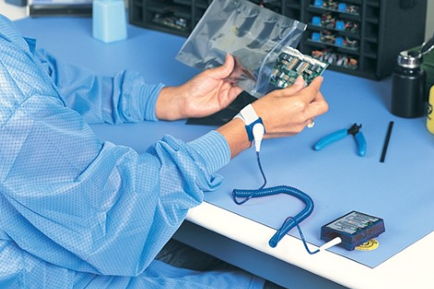
Yes, but their use depends on the operator’s work style, and all three don’t need to be used in tandem. Seated operators often rely on wrist straps connected to a common ground point, while mobile workers benefit from heel grounders or ESD shoes combined with conductive flooring. Smocks add an extra layer of protection by preventing charges from building up on clothing.
Are ESD shoes an effective grounding system?
Absolutely. ESD footwear, such as PUMA Safety ESD shoes, ensures consistent contact between the operator and the grounded floor, making it ideal for mobile operators who can’t rely on wrist straps. When paired with the right flooring, they maintain continuous grounding throughout each shift.
PAC’s ecosystem of flooring, footwear, and operator monitoring solutions enables facilities to create a layered grounding strategy that suits their workflow, reducing risk while enhancing comfort and compliance.

Do You Need an ESD Chair if You Have an ESD Floormat?
An ESD chair is recommended even when an ESD floor or floormat is in use. The user removing their feet from the floor could cause static generation and discharge. Find more answers to questions about ESD chairs in this in-depth article.
Do You Need an ESD Worksurface Mat if Your Workstation Has ESD Laminate?
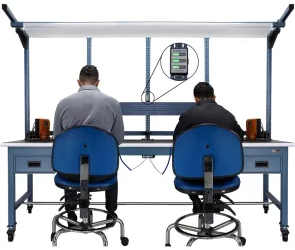
Any vulnerability within an ESD-sensitive environment could create a breach in an electrically conductive chain. When using an ESD mat on a grounded workstation, grounding the ESD mat is not essential; however, it’s not 100% safe. Learn more in this expert-written article about ESD mats and grounding.
Controlling the Environment: Ionization and Monitoring
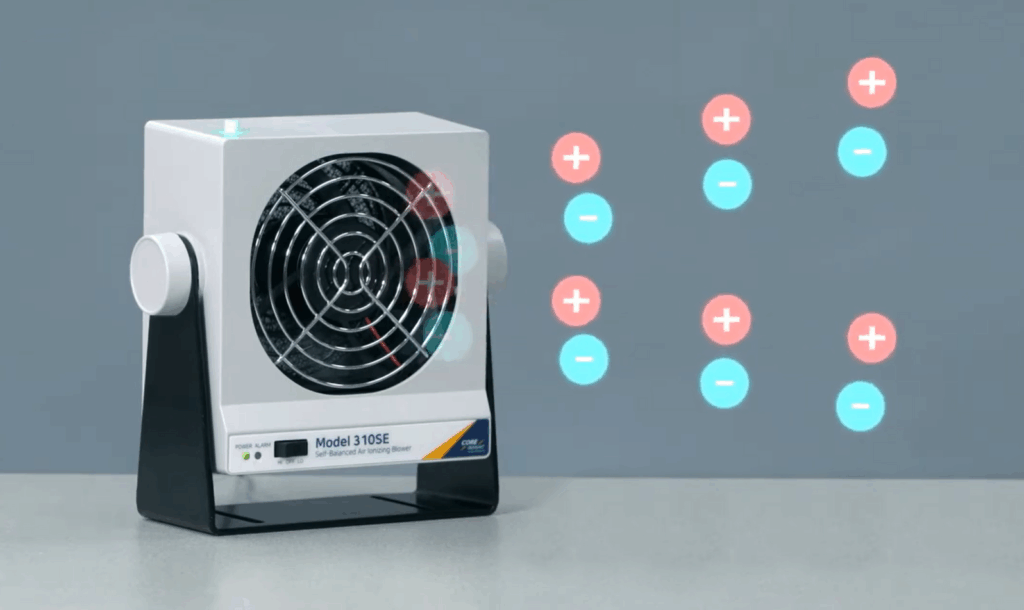
When should I use ionizers?
Ionizers are crucial when insulators or isolated conductors are present—objects that cannot be grounded directly. They neutralize static charges in the air and safeguard sensitive equipment during assembly, inspection, and packaging.
Should I monitor operators continuously?
Yes, especially in environments handling high-value or static-sensitive components. Continuous monitors provide real-time assurance that operators stay grounded, catching faults before they cause costly damage or rework.
To help facilitate continuous monitoring, PAC offers a Static Management Program for Data Acquisition. This program captures data from workstations, equipment, and continuous monitors for ESD events, providing a real-time overview of critical manufacturing processes. With this, an ESD coordinator can manage their ESD program from anywhere across multiple sites throughout all manufacturing stages.
Handling and Transport: Bags and Carts
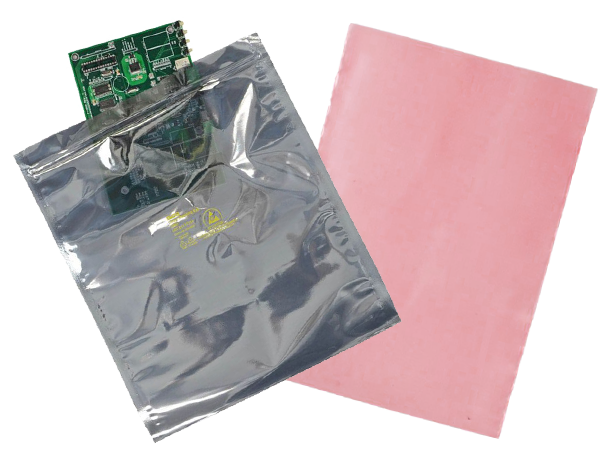
How many times can I reuse pink or static shielding bags?
That depends on the material. Pink poly bags are antistatic but not shielding; they prevent charge buildup but offer no barrier to external discharges, and their properties degrade over time. Static shielding bags (metal-in or metal-out) provide much better protection but still need regular check-ups for wear, wrinkles, or punctures. When in doubt, replace them.
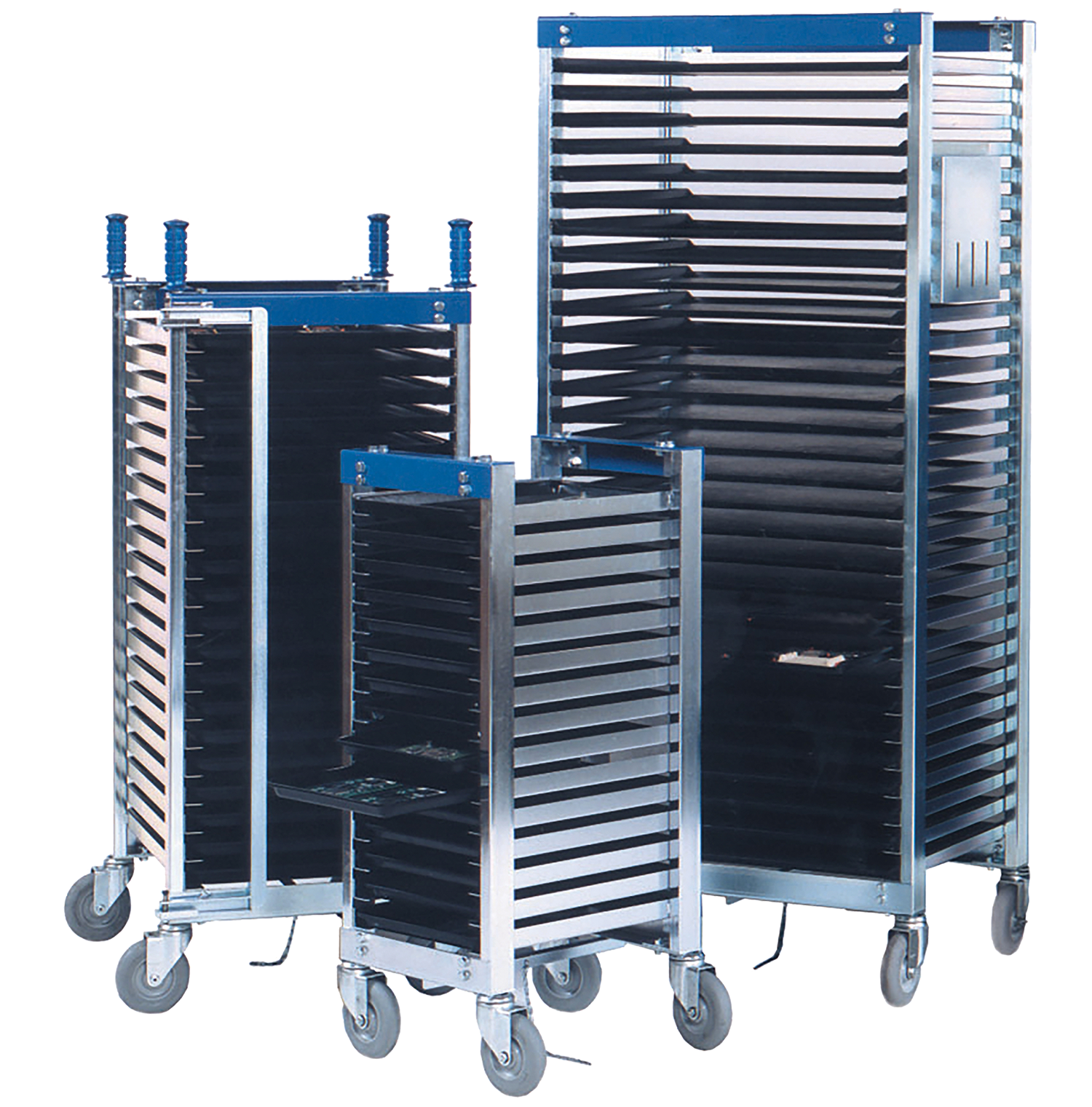
Can I use regular carts to transport devices?
Regular carts often generate triboelectric charges as they move, creating hidden risks. ESD-safe carts use conductive casters and surfaces to dissipate static safely. This is especially critical when moving assemblies between grounded areas or through cleanrooms.
PAC offers a wide selection of ESD-safe packaging, carts, and transport systems, helping teams move materials securely and in compliance with facility standards.
Beyond Compliance: How PAC Helps You Stay Ahead
Do I need more than the basics?
In many cases, yes. Leading manufacturers are moving beyond ANSI/ESD S20.20 to develop custom internal standards based on product sensitivity and customer needs. This proactive approach enhances yield, minimizes rework, and strengthens quality assurance programs.
PAC doesn’t just supply products; we partner with you to design, implement, and maintain comprehensive ESD programs. From initial assessment and product selection to long-term program auditing, we ensure that your static control measures evolve in tandem with your production environment.

Expertise You Can Measure
With decades of ESD expertise and a comprehensive product lineup, PAC helps you transform technical questions into practical solutions. Whether you’re developing a new static control program or improving an existing one, our ESD specialists are here to assist you in staying compliant, efficient, and confident in your protection strategy.
 Ready to optimize your ESD program? Contact a PAC ESD expert today to schedule an assessment or consultation.